What I Learned Building a House in Marbella
What building a villa from an empty plot in Marbella taught me about decisions, details, systems and the last five percent.
A few years ago I decided to do something I had never done before: build a house in Marbella.
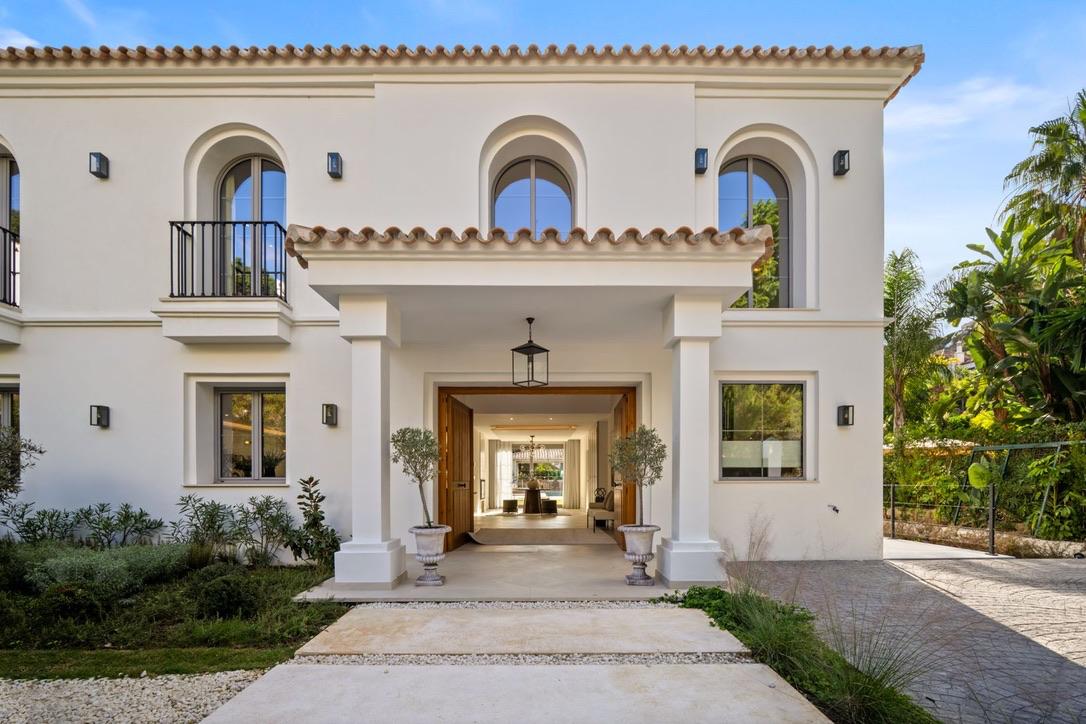
Today that house is Villa Celina, a contemporary villa in Los Arqueros, Benahavís, with four bedrooms, a gym, cinema, outdoor kitchen, heated pool and probably considerably more technology than a house really needs.
Looking at the finished pictures now, building it almost looks like a very logical process. You buy a plot, hire an architect and builder, make some decisions about kitchens and bathrooms and eventually somebody gives you the keys to a beautiful house.
That is not quite how I remember it.
I have spent most of my career building companies and software, not houses. But having now gone through the entire process of developing a villa in Marbella, I actually think there are quite a few similarities. You start with an idea that looks relatively simple. You surround yourself with people who know considerably more about the details than you do. The project becomes bigger and more complicated as you go along. You make hundreds of decisions with incomplete information, discover things you didn't know you needed to know and spend a surprising amount of time solving problems that nobody thought would be problems.
And then, somehow, there is eventually a finished product.
In this case I am very proud of the finished product.
Building while Marbella was changing
There is also a bigger story around the house that I probably didn't appreciate fully when we started building it.
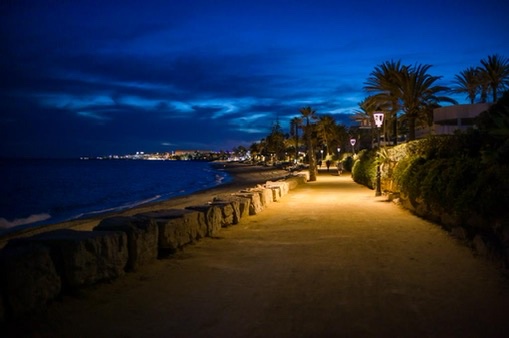
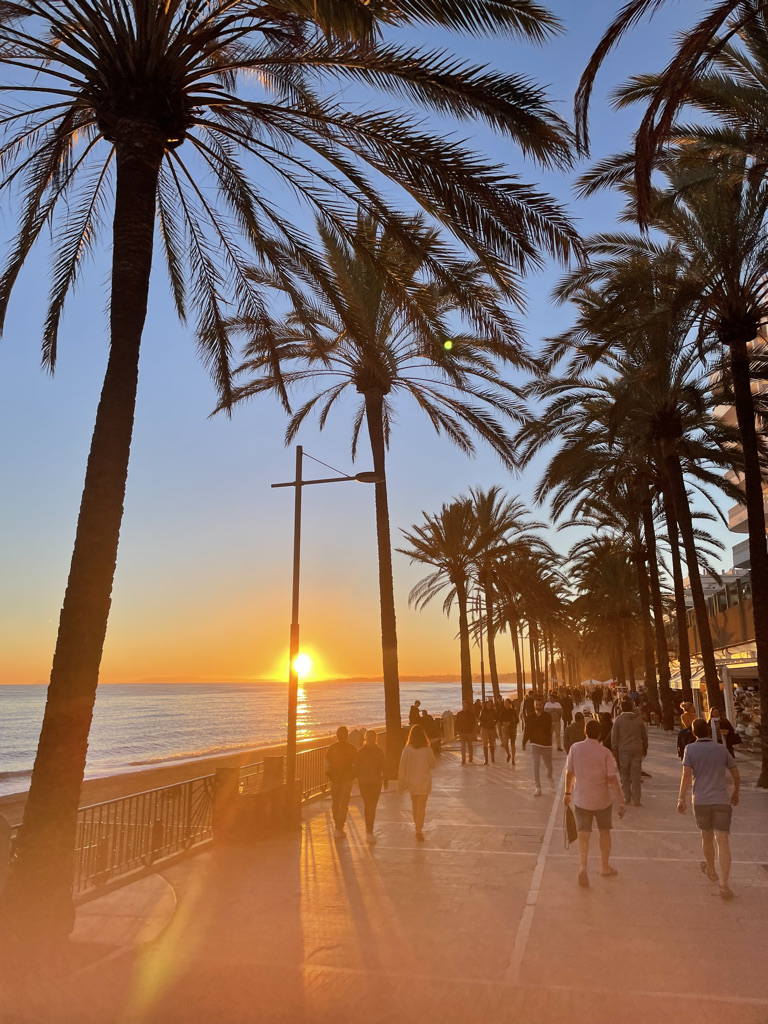
I have lived in the Marbella area for around seven years now, and during that time the place has changed quite significantly. Marbella has obviously attracted international visitors and wealthy second-home owners for decades. What feels different now is the number of people who are actually building their lives here.
Forbes wrote about exactly this shift recently, describing a new generation of internationally mobile entrepreneurs and executives who are making Marbella their home base rather than simply spending their holidays here. They even used the term “Marbella 2.0”. The article points to something you can see quite clearly if you live here: more international families staying permanently, better schools, restaurants, healthcare, hotels and infrastructure, and an increasingly interesting business and entrepreneurial community.
That description feels very familiar to me.
My own relationship with Marbella has followed a similar path. It went from being somewhere I lived to somewhere I built my life. I have worked from here, built companies from here, developed a network here and eventually literally built a home here.
The property market has changed along with it. Knight Frank's latest global research ranked Marbella among the world's stronger prime residential markets, with prime prices rising 8.1 percent during 2025 compared with 3.2 percent across the global prime markets they track. That doesn't surprise me very much. Marbella increasingly competes not only as a holiday destination but as somewhere international families can realistically live most of the year.
I think that change also influenced what we wanted Celina to be. It wasn't designed simply as a house that looks good for two weeks in August. It needed to work as an actual home: somewhere to work, have friends over, exercise, watch a film, cook outside and live for most of the year.
Building a house is really about hundreds of small decisions
One thing I underestimated before starting was the sheer number of decisions involved in building a house from scratch.
A finished house feels like one thing. During construction it is thousands of things.
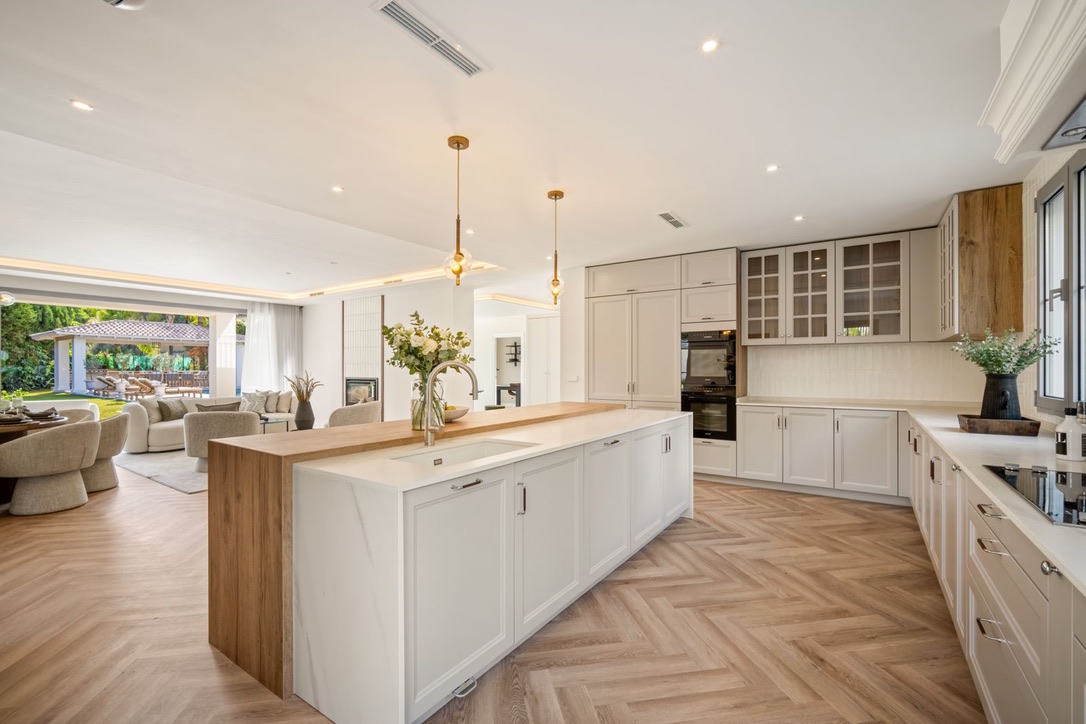
Where exactly should this wall end? How wide should the doors be? Where should the lights go? Which stone works outside as well as inside? Where do you put electrical sockets so you don't hate yourself two years later? How should the kitchen connect to the terrace? Where does the air-conditioning equipment go? What happens when you want an outdoor kitchen, a pool, irrigation, garden lighting, underfloor heating, an alarm, internet and a garage door all working together?
Some decisions are big and enjoyable. Architecture, layout, materials and furniture. Others are incredibly mundane. But strangely enough, the mundane ones can have just as much impact on whether the house actually works.
I worked with Julian Moreno on the construction and Jonna Högnäs on the interiors, furniture and execution. Having good people around you is probably the single most important part of the process, but even with good people you cannot outsource every decision. Somebody still needs to care about the whole thing.
That became one of my biggest lessons from the project. A house needs somebody who thinks about the house as a finished product rather than only their individual part of it.
The electrician can do a perfectly good electrical installation. The pool company can build a perfectly good pool. The gardener can install irrigation. The air-conditioning company can install air conditioning. Individually everything can be correct and you can still end up with a house that doesn't work particularly well as a whole.
Anyone who has built software will recognize the problem.
The last 5 percent takes a ridiculous amount of time
There is a point during a construction project when the house suddenly looks almost finished. The floors are there, the kitchen is in, the bathrooms work and the pool is full of water. You start thinking that you are basically done.
You are not.
The final part of Celina taught me that there is a very big difference between a house being built and a house actually working.
Even after the main construction was finished, there were endless details. Air conditioning that wasn't behaving properly. Underfloor heating doing things it shouldn't. Outdoor electrics affecting the pool and irrigation. Garden lights, timers, terrace lights and kitchen circuits. A garage door. Floor sockets. Bathroom lights. At one point even a new washing machine managed to vibrate itself across the room because the transport bolts hadn't been removed.
None of these things make for particularly glamorous Instagram content, but they are the difference between a beautiful house and a good house.
At one stage I had electricians, air-conditioning technicians, pool people, gardeners and cleaners moving through the property while we were trying to get everything working exactly as it should. Fix one thing and you occasionally discover another. Anyone who thinks the final snagging list is something you complete in an afternoon has either never built a house or has been considerably luckier than me.
If I built again, I would put much more emphasis on commissioning the entire house as one system. Not just asking whether the air conditioning works, but whether it works properly in every room. Not whether the outdoor electricity works, but what happens to the pool, irrigation and lighting if one circuit fails. I would test the house almost like we test software: real situations, repeated use and all the systems interacting with each other.
That probably sounds excessive until you have stood next to a green swimming pool wondering why the irrigation has also stopped.
Spend money on the things you actually use
Building in Marbella gives you endless opportunities to spend money. There is always a more expensive stone, another piece of home automation or something that somebody assures you every luxury villa absolutely needs.
You can lose perspective quite quickly.
What I like most about Celina today isn't any single expensive feature. It is the way the house works when you actually live in it.
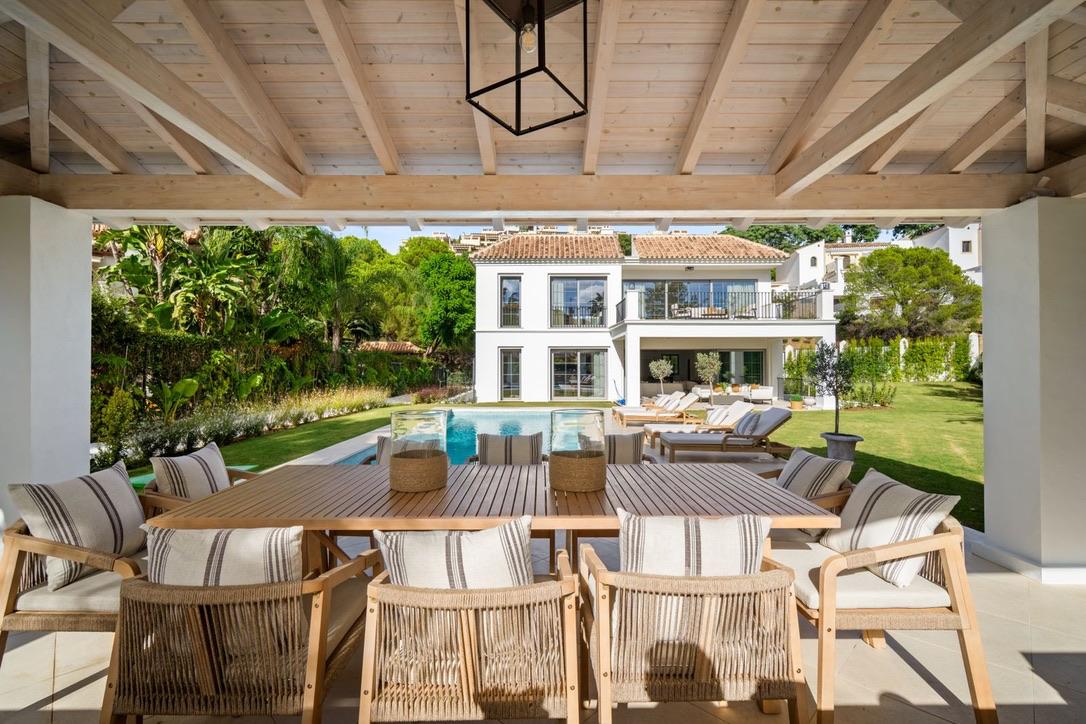
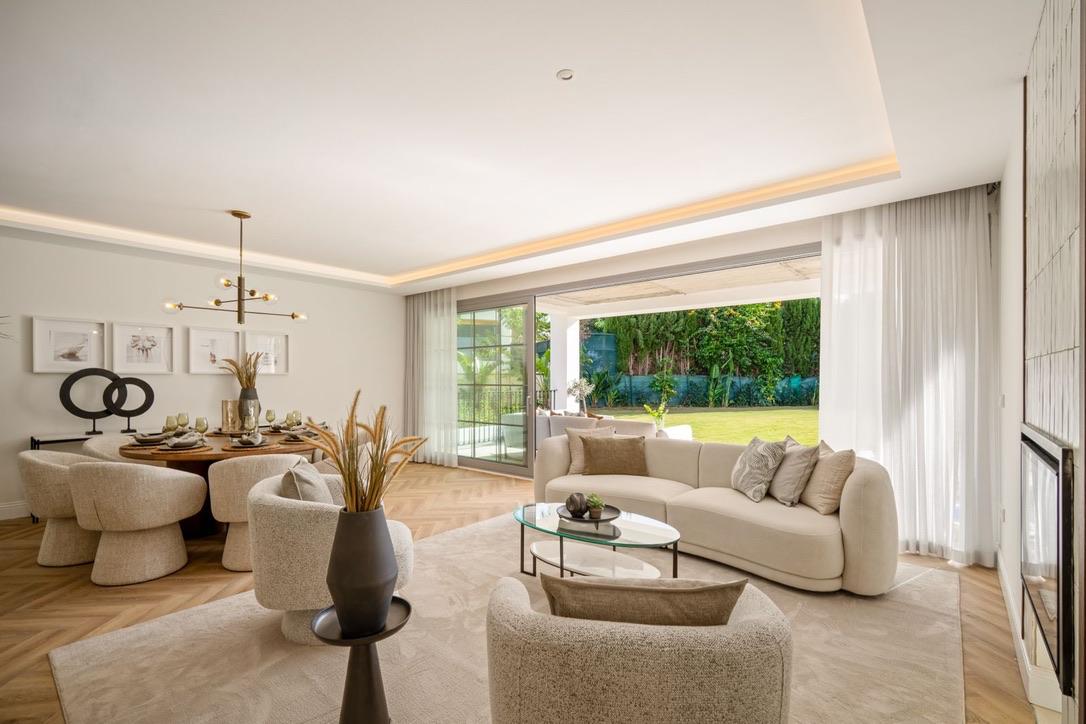
The main living spaces open directly towards the terrace, garden and pool, which means the distinction between inside and outside almost disappears for much of the year. There is a proper outdoor dining and cooking area rather than simply putting a barbecue in the corner of the terrace. The large windows bring a huge amount of light into the house. There are spaces for being social, but also places where you can disappear and do your own thing.
That is much more important to me than having something in the house simply because it looks impressive on a specification sheet.
The same applies to the interiors. Jonna helped with the interior design and furniture, and I think that part became increasingly important as the project progressed. Modern villas can very easily become impressive but slightly soulless white boxes. Architecture gets you surprisingly little of the way towards creating somewhere that actually feels like a home. Furniture, lighting, fabrics, art and all the smaller details change the house completely.
Looking at the professional photographs and films now, that is probably one of the things I am happiest with. It looks like a house somebody could actually live in rather than a render that happened to get built.
Marbella is an amazing place to build, but you need patience
There are some extremely good architects, builders, designers and craftsmen on the Costa del Sol. There is also a huge luxury property industry, so people are accustomed to ambitious projects and unusual requests. If you want a cinema, a heated pool or a very specific piece of stone, somebody here has almost certainly done it before.
The challenge is coordination.
Construction involves a long chain of people and dependencies, and communication becomes incredibly important. If one supplier is late, another supplier can't finish. If something has been interpreted differently from what you expected, changing it later can be both expensive and surprisingly complicated.
My instinct in business has always been to move quickly and solve things as they appear. That is useful in construction too, but I think building also rewards the opposite behaviour: deciding more things earlier than feels necessary.
Changing a line in software is cheap. Moving a wall isn't.
I would spend considerably more time before construction locking down details that seem almost premature at the beginning. Electrical plans, lighting, technical installations, furniture placement, outdoor areas and how all the systems fit together. Every decision made properly on paper is one less decision being made while six people are standing on a building site waiting for an answer.
Would I do it again?
Yes.
Which perhaps says more than anything else in this article.
There were definitely moments during the project when my answer would have been different. Building a house is expensive, time-consuming and occasionally completely absurd. You become interested in things you never expected to have an opinion about and develop strong feelings about subjects like drainage, electrical phases and the correct behaviour of an air-conditioning system.
But there is something very satisfying about starting with an empty plot and eventually walking into a real house.
Villa Celina now sits on a 1,127 square metre plot in Los Arqueros, with more than 500 square metres of built space across several levels. When I see the finished house in photographs and films today, it is easy to forget all the unfinished concrete, decisions, problems, WhatsApp messages, people coming and going and small fixes that came before it.
Maybe that is also why I wanted to write this.
The property world is very good at showing the finished result. Perfect photographs, perfect weather, perfectly arranged cushions and a description explaining that every detail has been meticulously considered.
Behind every finished house is a much less polished story.
In my case, that story taught me that building a good house is less about one brilliant architectural idea and more about hundreds of decisions being made reasonably well, by good people, over a long period of time. It taught me that the systems nobody photographs matter just as much as the things everybody sees. And it reinforced something I already knew from building companies: if you care about the end result, you eventually have to care about the details.
Would I change things if I built another one? Absolutely.
Would I build another one?
Also absolutely.
Further reading
Forbes — “How Marbella Became A Haven For The C-Suite Elite”
https://www.forbes.com/sites/forbes-global-properties/2025/09/29/how-marbella-became-a-haven-for-the-c-suite-elite/
Knight Frank — Prime International Residential Index / The Wealth Report 2026
https://www.knightfrank.com/research/article/2026/4/piri-100-ultimate-prime-residential-property-index
Last updated 5 October 2026.
A letter, roughly monthly
One essay a month on building companies, AI, investing and life in Marbella. No pitches, no funnels. Unsubscribe in one click.