Buying a house in Marbella: the process, the real costs, and the mistakes
How buying property here actually works, what it costs on top of the price, and what I learned taking a villa in Los Arqueros from plot to finished sale.
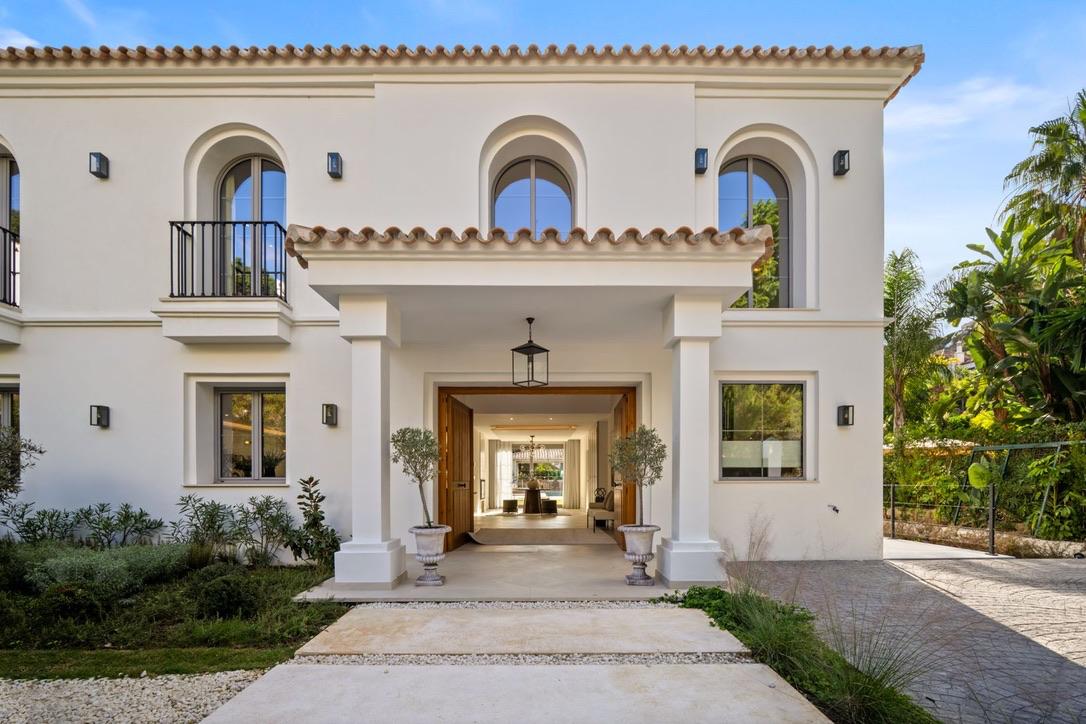
The Los Arqueros figures below are from my own project. Costs and tax rates change; confirm current figures with a Spanish lawyer and gestor before you sign anything.
I have bought, developed and sold property in Marbella, most recently a villa in Los Arqueros, Benahavís. I took it from a raw plot through a full design and build to a finished house that is now listed for sale. This is not theory. I also spent six or seven years driving around the coast looking at plots and potential renovation projects before I found this one, so I have made most of the mistakes before I made the right call.
My actual Los Arqueros numbers
I bought the plot for roughly €400,000. We then built the house for roughly €1.4 million. The finished villa is now listed at €3.9 million. I am not saying that to boast; I am saying it because a lot of people read glossy articles about Marbella property and have no idea what the actual numbers look like. The return is real, but it came from buying the right plot at the right price and then building something that was genuinely scarce, not from a hot market.
The math only works if you are patient and if you are willing to do the full stack. Buy the plot, design it, build it, finish it, and then either sell it or keep it. The people who lose money here are usually the ones who buy a finished villa at a price that already assumes the upside, or who start a renovation without a clear team.
The team that makes it work
I have a core team I now use on every project: Consjumo as builders, Juanma Sayago as architect, and Jonna at Interior by Design for interiors. They are excellent. They understand the coast, they understand Scandinavian taste, and they can actually deliver on a budget. I am happy to make introductions if you are serious about doing something similar.
The most expensive mistake in Spanish property is not the building itself; it is hiring the wrong gestor, the wrong architect, or the wrong builder. The coast has plenty of people who are good at selling the idea and terrible at finishing it. References matter more than portfolios.
The steps, in order
1. NIE. You cannot buy without a Spanish foreigner ID number. Start this first; everything queues behind it.
2. Your own lawyer. Independent, Spanish, property-specialised, not recommended by the selling agent. This is the single highest-return spend in the whole process.
3. Offer and reservation. A small reservation fee takes the property off the market, usually for two to four weeks while checks run.
4. Due diligence. Land Registry (nota simple), licences, community fees, outstanding debts, whether every square metre that exists is actually declared. On the coast, unregistered extensions and pool houses are common enough that you should assume you need to check rather than hope.
5. Private purchase contract. Typically 10% deposit, non-refundable if you walk.
6. Notary and completion. Signing, payment, keys. Then registration and utility transfers, which your lawyer or gestor handles.
What it actually costs on top of the price
| Item | Resale | New build |
|---|---|---|
| Transfer tax (ITP, Andalusia) | ~7% | not applicable |
| VAT (IVA) | not applicable | ~10% |
| Stamp duty (AJD) | not applicable | ~1.2% |
| Notary and Land Registry | ~1–1.5% | ~1–1.5% |
| Lawyer | ~1% + VAT | ~1% + VAT |
| Rough total on top | ~10–13% | ~13–14% |
Add mortgage arrangement costs if you are borrowing, and a valuation. Non-residents can usually borrow from Spanish banks, but the process is slower and more document-heavy than most people expect. We have used bank financing on some projects, and there are real traps in the terms, the valuations and the timelines. Do not DIY this part.
The mistakes I see most
Buying in the first two months. By far the most expensive one. People fall in love on a sunny Tuesday in May and sign before they know what the area is like in August or in February.
Using the agent's lawyer. Or no lawyer. You would not do this at home; do not do it in a second language.
Underestimating the running costs. Community fees, IBI, rubbish tax, pool and garden maintenance, non-resident income tax if it is a second home. A beautiful house with a big plot has an annual number attached to it that nobody mentions at the viewing.
Assuming the renovation timeline. Licences, August, and the general pace of the coast. Whatever the builder quotes, add a margin. On Los Arqueros the finish quality was worth the wait, but it was a wait.
Optimising for the view over the life. Hill houses are spectacular and mean you drive for everything. That is a real trade-off, not a footnote.
What I would do again
Buy the worst plot in the right area rather than the best plot in the wrong one. Location here is not a cliché; it is your commute, your school run and whether you can walk to dinner. In Los Arqueros the thing that made it work was the plot, the light and the setting — everything else was fixable.
And I would hire the team before I fell in love with the plot. A good architect and a good builder will save you more money than they cost, and a bad one will turn a good project into a year of stress.
If you want to talk a specific purchase through, message me. I have no interest in selling you anything, but I can usually tell you whether you are looking at something sensible.
Common questions
- How much does it cost to buy a house in Marbella beyond the price?
- Budget roughly 10–13% of the purchase price for a resale: about 7% transfer tax in Andalusia, 1–1.5% notary and registry, and around 1% plus VAT for a lawyer. New builds are charged around 10% VAT plus about 1.2% stamp duty instead of transfer tax.
- Is it realistic to buy a plot and build in Marbella?
- It can be, but it is very different from buying a finished house. My Los Arqueros project cost roughly €400K for the plot and €1.4M to build, and the finished house is now listed at €3.9M. The upside exists only if you have the right team, the patience for a multi-year build, and the ability to buy the plot at the right price. Otherwise you are better off buying a finished villa.
- Do I need a lawyer to buy property in Spain?
- It is not legally required, but you should always use one, and it must be your own independent lawyer rather than one suggested by the selling agent. They check the Land Registry, licences, debts and whether the built area is legally declared.
- How hard is it to get a mortgage in Spain as a foreign buyer?
- Possible, but slower and more document-heavy than in most northern European countries. Spanish banks will lend to non-residents, but the terms, valuations and timelines have real traps. Use a specialist broker or mortgage adviser, not the bank's first offer.
- How long does buying a house in Marbella take?
- Usually two to four months from accepted offer to signing at the notary, assuming your NIE is already in place and there are no licence or registry problems. Cash purchases can be faster; mortgage purchases are usually slower.
This is part of my Marbella guide: everything I have written about moving here, living here, and running a company from the coast.
Last updated 14 August 2026.
A letter, roughly monthly
One essay a month on building companies, AI, investing and life in Marbella. No pitches, no funnels. Unsubscribe in one click.